IIT Madras’ IBSE to organise 6th International Symposium on microbiomes in environment, health & beyond
EducationK Puspa27 Oct 2026
Chennai, Oct 27: The Centre for Integrative Biology and Systems mEdicine, a Centre of Excellence at IIT Madras, is organising the 6th IBSE International Symposium from 11th to 13th February 2027 on the IIT Madras campus.
The study of microbial communities, or microbiomes, has applications in human health, agriculture and animal husbandry, waste treatment, bioremediation and environmental health. Participants will gain insights on modelling and engineering microbiomes as a critical emerging technology, with potential uses ranging from eliminating childhood malnutrition to degrading plastics and exploring other planets.
The last date for early bird registration through the following link is 31st October 2026 - https://ibse.iitm.ac.in/symposium-06/.
Titled ‘Microbiomes in Environment, Health, and Beyond’, the three-day symposium will bring together speakers from India and abroad to discuss microbial omics across human, gut and environmental microbiomes, along with the computational methods used to analyse this data.
The symposium is being organised by Prof. Karthik Raman, Coordinator of IBSE and Professor in the Department of Data Science and AI, IIT Madras, and Dr. Kasthuri Venkateswaran, Adjunct Faculty at IIT Madras. Dr. Venkateswaran retired from NASA’s Jet Propulsion Laboratory (JPL), where he spent over two decades studying microbes in spacecraft assembly cleanrooms and on the International Space Station, research central to NASA’s planetary protection efforts.
Speaking about the symposium, Prof. Karthik Raman, Coordinator of IBSE and Professor in the Department of Data Science and AI at IIT Madras, said,
“Microbiomes shape the health of people and of the planet, and understanding them increasingly depends on bringing data, models and experiments together. In its recent editions, this symposium has become a meeting point for researchers working on these questions, and we are delighted to welcome some of the field’s leading scientists to Chennai once again.”
Highlighting the potential of microbiome research and the symposium’s focus on scientific discovery, Dr. Kasthuri Venkateswaran, Adjunct Faculty at IIT Madras, said,
“Extremophiles, microbes that thrive in some of the harshest environments on Earth, hold extraordinary potential for discoveries in biotechnology, human health, and space exploration. This symposium brings together global scientific leaders to unlock the untapped potential of microbial diversity, translate discoveries into real-world solutions, and inspire the next generation of scientists to explore the frontiers of life on Earth and beyond.”
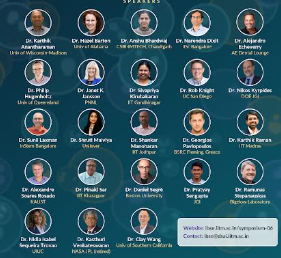
Speakers scheduled to address the symposium include eminent scientists such as Rob Knight (University of California San Diego), one of the world’s foremost microbiome researchers and a co-founder of the Earth Microbiome Project and the American Gut Project. Other speakers include Daniel Segrè (Boston University) and Janet Jansson (Pacific Northwest National Laboratory), among more than 20 leading researchers from India and abroad. Their talks will span translational applications, biotechnological discovery, and the role of microbial omics in space exploration, astrobiology and planetary protection.
IBSE was established at IIT Madras in 2015 to bring together researchers working on integrative and systems approaches to biology and medicine. Since its first edition in 2018, the IBSE International Symposium has hosted leading scientists from across the world at IIT Madras. Early editions explored themes ranging from synthetic biology to clinical genomics, while the three most recent editions have focused squarely on microbiomes, featuring speakers such as Jillian Banfield (UC Berkeley) and Eugene Koonin (National Institutes of Health) and helping build a growing community of microbiome researchers in India. The 6th edition continues this tradition, with a programme that spans fundamental microbial ecology, human health and the search for life beyond Earth.
Sessions will cover ecology and evolution; skin, soil, marine and built environments; multiomics, bioinformatics and mathematical models; phage–host dynamics; and antimicrobial resistance. The programme also includes poster sessions, flash talks and a panel discussion, with opportunities for participants to connect with researchers from across the field.
The symposium also aims to bring leading scientists from India and abroad together to present their recent findings and discuss directions for fostering a strong microbiome community in India. Early career researchers will have an opportunity to participate and contribute actively.


Education
Jaro Education Recognized as EdTech Leader of the Year at ET Now Business Awards 2025

Education
Galgotias University, VLSI Society Ink MoU to Boost Semiconductor Innovation

Education
IIIT Hyderabad Announces Leadership Transition: Prof P J Narayanan Hands Over Charge to Prof Sandeep Shukla
Education