Ventiva Partners with ASUS to Explore Next-Generation Thermal Architectures for Compact AI Computing Systems
TechnologyNeel Achary01 Jun 2026
TAIPEI, Taiwan - June 1, 2026 – Ventiva®, a leader in solid-state cooling solutions, today announced at Computex 2026 a strategic partnership with ASUS to explore next-generation thermal architectures for compact AI computing systems. Through this collaboration, the companies will evaluate how Ventiva's ionic cooling technology can support future ASUS NUC and Mini-PC designs.
As AI workloads demand more processing power in increasingly constrained form factors, thermal management has emerged as one of the most critical factors in system design. Conventional cooling solutions consume significant board space, restrict component placement, and generate significant vibrations that introduce acoustic tradeoffs that become harder to absorb as devices grow more compact and more powerful.
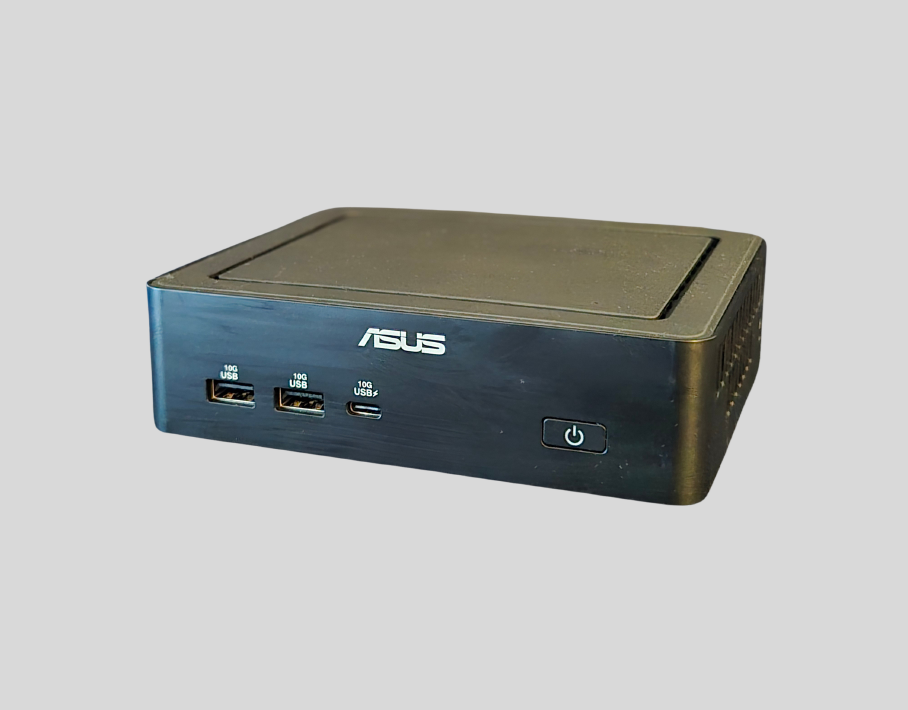
Ventiva's ionic cooling solutions deliver silent, vibration-free thermal management in a modular, compact form factor that recovers board space and expands layout flexibility for system designers. Through this partnership, Ventiva and ASUS will explore the potential role of Ventiva’s ionic cooling in future ASUS AI system architectures, assessing where the technology could deliver the greatest design impact.
As part of this partnership, Ventiva is showcasing an ASUS NUC demonstration platform at Computex 2026. The system illustrates the direction of the collaboration and provides a real-world platform for evaluating thermal architecture possibilities in compact AI-capable designs.
“Thermal management has always been treated as a component-level decision. What we're seeing now, and what this partnership with ASUS reflects, is that it's becoming a platform architecture decision. How you cool a system determines what you can build,” said Christian Schlachte, Director, Product Management, Ventiva. “We're excited to work with ASUS to demonstrate what the shift to a ‘thermal first’ architecture makes possible."
Technical Background: Ventiva Ionic Cooling Technology
Ventiva’s solid-state, all-electronic heat transfer technology leverages the principles of electrohydrodynamic (EHD) flow to move ionized air molecules within an electric field. This ionic cooling innovation moves air without mechanical fans, creating silent, vibration-free airflow. Unlike traditional cooling systems, Ventiva solutions scale easily, integrate cleanly into system designs, and enable airflow configurations that were not previously possible.
The Ventiva thermal management subsystem is thin, lightweight, and highly modular, and is engineered to adapt to diverse system architectures. It is comprised of a self-contained air blower device, fin stack, and vapor chamber or heat pipe, delivering optimized cooling efficiency up to 1.1 CFM per device. The air blower devices can be positioned adjacent to heat sources including SoCs, memory, and power delivery components, without the space constraints imposed by traditional fan-based cooling.
Frequently Asked Questions
- What is ionic cooling, and how does it work?
Ionic cooling uses electrically charged particles to move air without any rotating parts. Ventiva's ionic cooling technology harnesses the power of a minuscule plasma field to move air particles, delivering targeted coolingthat removes heat from targeted areas of a system. The result is a solid-state cooling solution with no mechanical parts, no vibrations, and no noise.
- Does ionic cooling produce any noise?
No. Ventiva’s ionic cooling technology has been tested in anechoic chambers, showing less than 15 dBa sound pressure. This is an imperceptible level that is barely above the background noise level in an anechoic chamber.
- How thin are Ventiva's air blower devices, and where can they be placed in a system?
Unlike traditional blowers which are “top-in / side-out” air flow devices, Ventiva’s ionic cooling module does not need an air gap to draw in air; it is a more space-efficient “side-in / side-out” device. This allows for a lower internal height for a customer application as low as 5 mm, which enables thinner product designs.
- Why is ionic cooling particularly well-suited for AI workloads?
AI workloads generate intense, concentrated heat at the processor, as well as the memory and accelerator components operating in close proximity to the SoC. Conventional cooling solutions struggle to address these distributed heat sources without adding bulk or noise. Ventiva's modular approach allows each thermal zone to be cooled independently and precisely, so the system can sustain the kind of continuous, high-performance operation that AI applications demand.
Learn More
- Ventiva Ionic Cooling: How It Works
- ASUS NUC: Powerful, Compact, Versatile Solutions for All
- Ventiva Zoned Cooling Design: Unlocking a New Era of System Design Freedom


Technology
Infinix NOTE 60 Pro Set To Bring a New Design Benchmark with Active Matrix LED Display and Flagship Aluminium Craftsmanship

Technology
India Startup Ecosystem Expands in 2026 with Deep-Tech and Consumer Innovation Boom
Technology
transcosmos releases health promotion support services for local governments
Technology