MIT-WPU’s 8th National Conference on Media and Journalism Calls for Truth and Accountability in the Age of AI
NewsK Puspa02 Nov 2026
Mumbai, Pune, Nov 02: The growing influence of algorithms on news consumption, the real-world dangers of misinformation, and the challenge of preserving public trust in the age of AI emerged as key concerns at MIT World Peace University’s 8th National Conference on Media and Journalism, held in Pune. Organised by the Department of Media & Communication around the theme “Dialogue, Inclusivity & Peace,” the two-day conference brought together senior editors, journalists, filmmakers, legal and policy experts, and advertising professionals to discuss the evolving responsibilities of media in a rapidly changing information landscape.
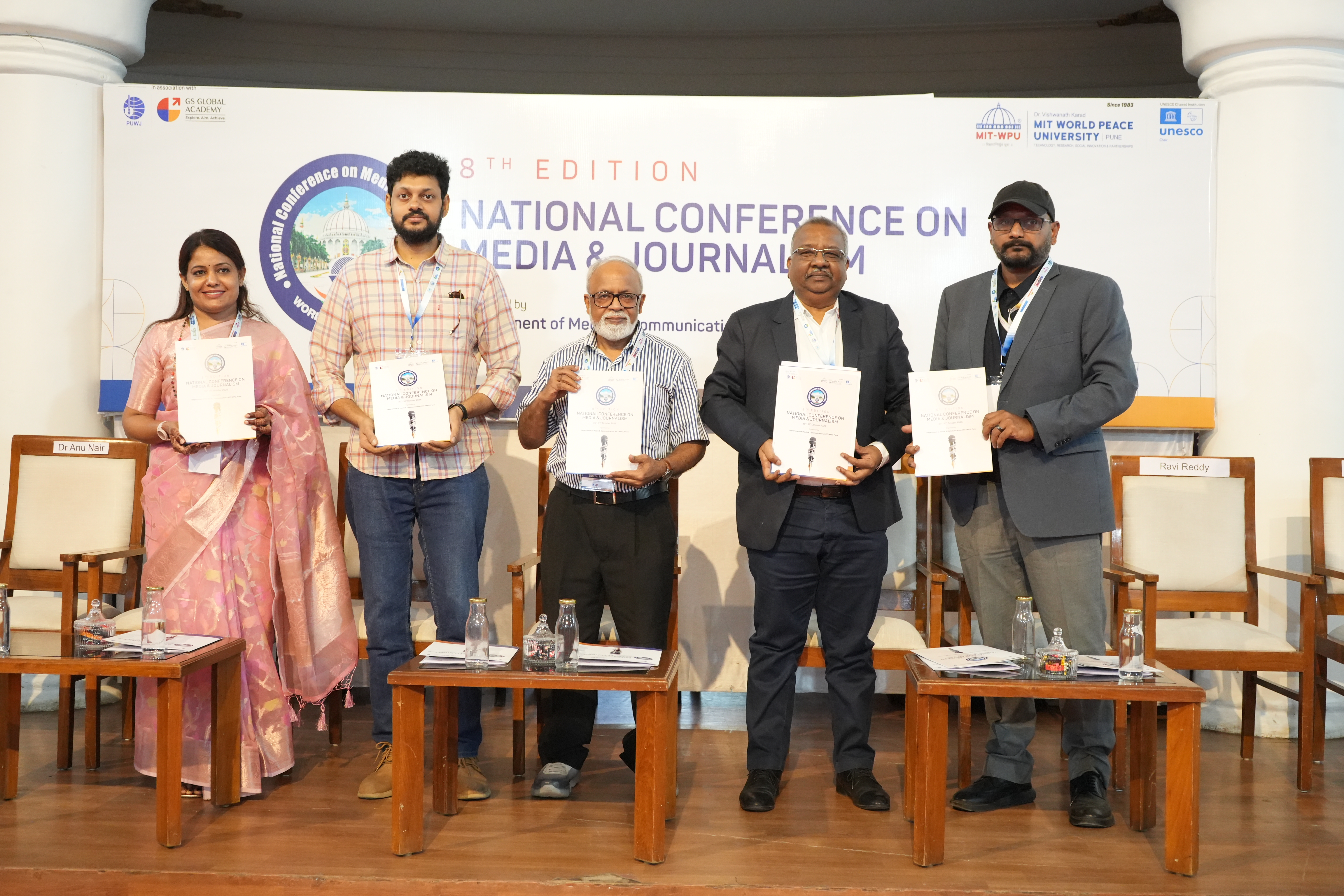
Welcoming the delegates at the inaugural session, the Vice Chancellor of MIT-WPU said the university is committed to experiential learning and curriculum innovation so that students are job-ready from day one. He added that the way journalists communicate matters, drawing on a verse from the Bhagavad Gita on speech that is truthful, pleasant and free of agitation.
“The responsibility now lies with the next generation to shape the future of media and journalism. Success isn't about publishing first—it is about validating truth, maintaining credibility, and delivering information that serves society meaningfully.” Prof. Dr. Raviraja N. Seetharam, Vice Chancellor, MIT-WPU
Delivering the welcome address, Dr. Abhijit Nair, Dean of the School of Liberal Arts at MIT World Peace University, stressed the core focus of the conference, stating, 'The question before us today is no longer just how we reach people, but how we earn their trust through undivided, thoughtful attention.'"
The inaugural session, “The Attention Age: Media, Algorithms and the Battle for Trust,” was led by Chief Guest Ramesh Menon, author, award-winning journalist, documentary filmmaker and educator. He said shrinking attention spans and the rise of algorithms have changed who decides what people read. “The editor has changed. Today, who is the editor? The editor is an algorithm. And the algorithm does not ask you, ‘Is this true? Is this important?’ It has only one thing: ‘Will it hook the reader?’” he said.
Ravi Reddy, Resident Editor, The Hindu, Hyderabad, said verification matters more than speed in an age of AI-generated content and deepfakes, and that AI can assist newsrooms but cannot replace human judgement. “Algorithms measure engagement. Journalism measures public value’ he said.
The valedictory session had theme, “Voices, Visions and the Future: Reshaping Media Discourses.” Chief Guest Dr Meena Sharma, Consulting Editor, News24, was joined by filmmaker Ashoke Viswanathan and Rajnandini Pawar, First Runner-Up, Femina Miss India. "The media today faces severe challenges regarding its credibility, and we must actively work to address them. There needs to be a conscious effort toward creating high-quality, impactful stories. Media students should take the lead by working on such stories—whether by pitching them to established outlets for publication or utilizing social media and digital platforms to reach the public directly." Dr Meena Sharma, Consulting Editor, News24
Sound designer and editor ASGK Teja described how conflicting claims on social media left him confused, and how he turned back to his daily newspaper for verified information. “When I took just five minutes to read the newspaper, I felt so happy. I was confident that I had received proper, verified information.”
Alongside the keynote addresses, the two-day conference featured four insightful panel discussions that examined how media, technology and public life are changing.
Journalism in Transition: Changing Media, Audiences and News, Moderated by Dr Yogesh Joshi, Metro Editor, Hindustan Times, the session featured Ravi Reddy, Resident Editor, The Hindu; Vishal Khandelwal, journalist and content creator; Vishakha Nikam, presenter, BBC Marathi; and Abhijit Atre, Associate Resident Editor, Times of India, Pune. The panel discussed changing news consumption, commercial pressures on journalism, and the need for credibility and editorial independence.
Panel discussion on topic ‘Cinema Reimagined: AI, Virtual Production and the Future of Indian Film Making’ was moderated by Dr Mithila Biniwale, Assistant Professor, Department of Media and Communication, MIT-WPU, the Day 1 session featured sound designer and editor ASGK Teja; filmmaker Ashoke Viswanathan; and actor and FTII professor Jijoy Rajagopal. The discussion explored AI’s role in filmmaking and the importance of human creativity, storytelling and skill development.
Safeguarding Democracy: Convergence of Media, Law, Governance and Public Policy Moderated by Dr Shreya Bera, Assistant Professor, Department of Liberal Arts (English), MIT-WPU, the Day 2 session featured IAS officer Mahesh R Zagade; Priya Jain, Founder, Finology Legal; Siddhartha Benninger, Director, Institute for Sustainable Development, CDSA; Prof. Ujjwala Barve, Dean, Modern Sciences and Professional Skills, Tilak Maharashtra Vidyapeeth, Pune; and Naresh Bodhke, Professor, Gokhale Institute of Politics and Economics. The panel highlighted media independence, misinformation, censorship and the need for transparency and informed citizen participation.
Another panel discussion ‘Persuasion Rewired: AI, Advertising, PR and the Future of Branding’ was moderated by Shrikaant Iyer, Head Content Production, HT Media (Fever 94.3), the Day 2 Youth to Youth session featured Belinda Dokras, Director, Network Advisory, Dentsu Creative, and Sarthak Thakur, Founder and CEO, SeeTusk Creative Agency. The discussion focused on AI in advertising and PR, human creativity, authentic communication and building consumer trust.
The conference ended with a call for students and professionals to put verification, ethics and public service ahead of virality.

News
Global Sports Pickleball Announces Season 2 Pro & Challenger League Auction in Mumbai
News
Celonis Climbs Forbes 2025 Cloud 100 List as Demand Grows for Process Intelligence in the AI Era
News
Dr. Bhargav Mallappa’s Malaysia Visit Marked by Meeting with Prince Dato’ Seri Dr. Christian Kingsley Goh Kwee Keng JP
News