Delhi-NCR Sees Season’s First Poor Air Day; GRAP-I Curbs Take Effect As Winter Chill Sets In
NewsAbani Sahu22 Oct 2026
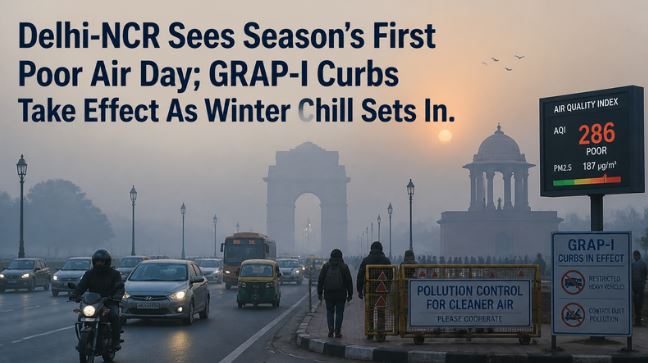
Oct 22: Delhi-NCR woke up to a noticeable chill on Thursday morning, but the drop in temperature brought little relief from pollution. The capital recorded its first “poor” air-quality day of the season, prompting the Commission for Air Quality Management (CAQM) to enforce Stage I of the Graded Response Action Plan (GRAP) across the National Capital Region.
Representational Image
Air Quality Worsens
Delhi’s overall AQI rose sharply to 244 at 2 pm on October 21, up from 179 in the “moderate” category the previous day. The CAQM said the deterioration, combined with forecasts of persistently elevated pollution, necessitated immediate action.
Chandni Chowk was among the worst-affected areas, recording an AQI of 306 in the “very poor” category, with PM10 identified as the dominant pollutant. Several other stations, including Mandir Marg, Punjabi Bagh, Sirifort and Dwarka Sector 8, also recorded AQI levels in the poor range.
Under the CPCB scale, an AQI of 201–300 is “poor,” 301–400 is “very poor,” and 401–500 is “severe.” Authorities said pollution levels are expected to remain elevated over the coming days.
GRAP-I Restrictions
Stage I measures are now in force across Delhi and adjoining parts of Haryana, Uttar Pradesh and Rajasthan. The restrictions prohibit the use of coal and firewood in tandoors at hotels, restaurants and open eateries, and impose curbs on diesel generator sets.
The CAQM’s GRAP sub-committee has directed agencies to implement the measures immediately, strengthen surveillance and ensure compliance with the citizen charter. Officials will continue to track air quality and weather conditions before considering stricter steps.
Metro Adds Trips
To reduce reliance on private vehicles, the Delhi Metro Rail Corporation will operate 20 additional train trips on weekdays from October 22. The DMRC will also intensify dust-control work at construction sites and nearby roads, including clearing accumulated dust, removing garbage from footpaths and cleaning road medians.
Winter Action Plan Ahead
The curbs precede the Delhi government’s Winter Action Plan, which will come into effect from November 1. It includes measures targeting vehicular emissions, construction dust and industrial pollution, along with stricter dust monitoring and increased mechanised road sweeping.
The plan also proposes a “No PUC, No Fuel” policy, under which vehicles without valid Pollution Under Control certificates will be denied fuel. From November 1, non-Delhi registered vehicles that do not meet BS-VI emission norms will face entry restrictions, subject to exemptions.


News
Global Sports Pickleball Announces Season 2 Pro & Challenger League Auction in Mumbai
News
Celonis Climbs Forbes 2025 Cloud 100 List as Demand Grows for Process Intelligence in the AI Era

News
Dr. Bhargav Mallappa’s Malaysia Visit Marked by Meeting with Prince Dato’ Seri Dr. Christian Kingsley Goh Kwee Keng JP
News