World Sickle Cell Day 2026: From “Closing the Survival Gap” to a New Era of Cure, Care and Equity
HealthBhumika Lenka19 Jun 2026
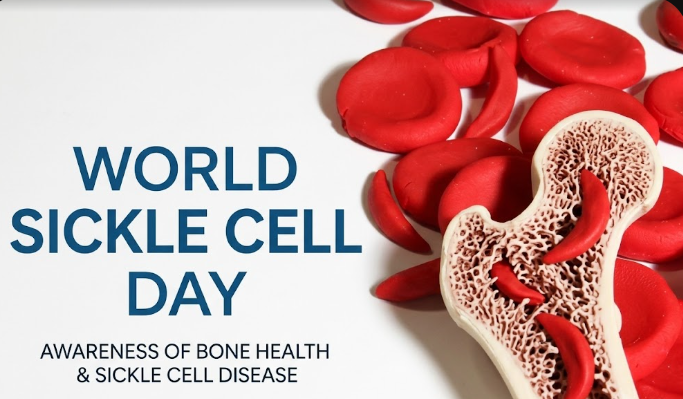
Every year on June 19, the world observes World Sickle Cell Day—but in 2026, the conversation feels different. It is no longer limited to awareness alone. It is now about urgency, equity, and a rapidly evolving medical future.
The official theme for World Sickle Cell Day 2026 is:
“Closing the Survival Gap: Equity in Sickle Cell Disease”
This theme captures a critical truth: survival should not depend on geography, income, or access to healthcare. It calls for a world where early diagnosis, advanced treatment, and continuous care are available to every patient—not just a privileged few.
A Disease at the Centre of Inequality and Innovation
Sickle cell disease (SCD) is a genetic blood disorder where red blood cells become rigid and sickle-shaped, blocking normal blood flow. This leads to severe pain episodes, anaemia, organ damage, and lifelong health complications.
Globally, over 300,000 babies are born with SCD every year, with the highest burden in low- and middle-income countries.
India carries one of the heaviest burdens worldwide, particularly affecting Scheduled Tribes and underserved communities, where delayed diagnosis and limited healthcare access continue to shape outcomes.
Yet, 2026 marks a turning point—where science, policy, and public health are beginning to converge.
From Hope to Reality: The Rise of Gene-Based Cures
For decades, sickle cell disease was managed, not cured. That is now changing.
Gene Therapy: Rewriting the Disease Itself
One of the most significant breakthroughs is CRISPR-based gene therapy, including treatments like Casgevy. This approach modifies a patient’s own stem cells so the body can produce healthy haemoglobin.
For the first time, medicine is not only treating symptoms—but addressing the genetic root cause.
Stem Cell Transplant: The Established Cure
Hematopoietic stem cell transplantation (bone marrow transplant) remains the only established curative option today. While limited by donor availability and eligibility, it has transformed outcomes for many children worldwide.
Targeted Medicines: Turning a Fatal Cycle into a Manageable Condition
Modern therapies are reshaping daily life for patients:
- Voxelotor – improves anaemia by preventing red blood cell sickling
- Crizanlizumab – reduces painful crisis frequency
- L-Glutamine – lowers oxidative stress in cells
- Hydroxyurea – long-standing therapy that increases fetal haemoglobin
Together, these treatments are reducing hospitalisation, improving quality of life, and extending life expectancy.
India’s National Mission: Screening at Scale, Saving Lives Early
India has launched the National Sickle Cell Anaemia Elimination Mission, targeting elimination of the disease as a public health problem by 2047.
Its core focus includes:
- Mass screening in high-burden districts
- Distribution of Sickle Cell Identity Cards
- Early diagnosis and treatment linkage
- Creation of digital patient tracking systems
Large-scale outreach programmes in tribal and rural regions are identifying cases earlier than ever before—often before symptoms become severe.
The Survival Gap: Why Theme 2026 Matters
The theme “Closing the Survival Gap” is not symbolic—it reflects real-world inequality.
Two children with the same disease may have entirely different futures depending on:
- How early they are diagnosed
- Whether treatment is accessible
- Whether their families are informed
This gap is what global health systems are now being challenged to eliminate.
Prevention Begins Before Birth: The Power of Genetic Awareness
One of the most important yet overlooked aspects of SCD is the sickle cell trait.
- Carriers usually have no symptoms
- But they can pass the gene to children
- If both parents are carriers, there is a 25% risk of disease in the child
This makes pre-marital and pre-pregnancy screening essential, especially in high-risk regions.
Awareness here is not optional—it is preventive medicine.
Everyday Management: Small Actions, Lifelong Impact
Even with advanced treatment, daily care remains essential:
Medical Support
- Vaccinations and infection prevention
- Daily antibiotics in young children (as prescribed)
- Folic acid supplementation
Lifestyle Protection
- Proper hydration
- Avoiding extreme temperatures
- Early response to pain episodes
These steps reduce complications and improve long-term stability.
A New Healthcare Ecosystem Emerging
Beyond treatment, India is building a structured ecosystem through:
- National Health Mission screening portals
- Community outreach camps
- Tribal health initiatives
- Genetic counselling expansion
The goal is not just treatment—but continuity of care from birth to adulthood.
Conclusion: From Awareness to Equity, From Equity to Cure
World Sickle Cell Day 2026 marks a rare moment in global health—where science is advancing rapidly, and policy is beginning to align with need.
The theme “Closing the Survival Gap: Equity in Sickle Cell Disease” is both a promise and a challenge.
Because today, the question is no longer whether sickle cell disease can be understood.
It is whether every child—regardless of where they are born—can access:
- Early screening
- Timely treatment
- And, one day, a cure
The tools are now available. The systems are being built. The responsibility is collective.
And the message is clear:
A survival gap that can be closed must not be allowed to remain open.