Bismil Brings Sufi Tradition to a New Era of Style
EntertainmentK Puspa23 Oct 2026
Oct 23: Ahead of his India Tour, Sufi singer Bismil is embracing a new sense of style, one that draws from the grandeur of the traditional mehfil, the richness of Indian craftsmanship and the timeless elegance of Sufi culture.
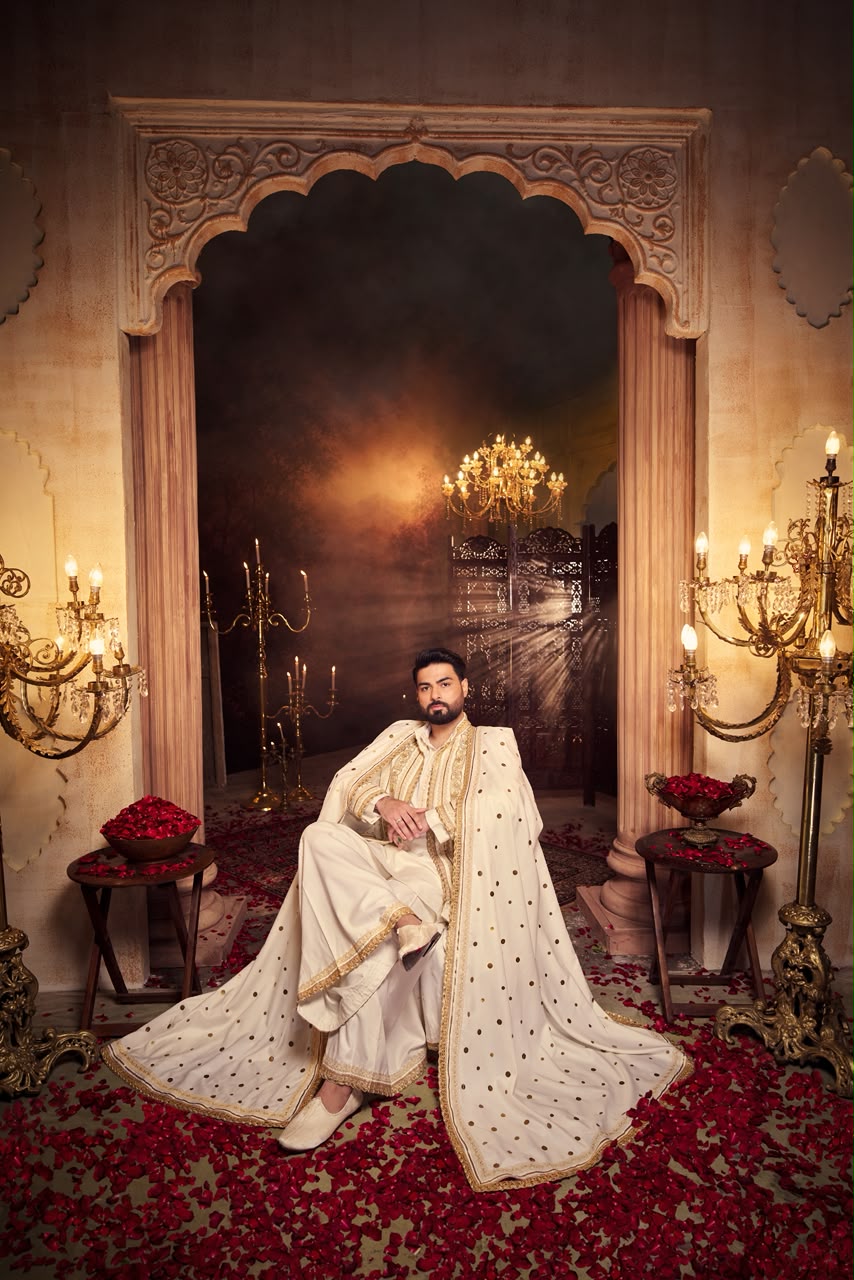
Dressed in ivory and antique gold, Bismil appears in an ensemble marked by intricate embroidery and a flowing cape. Around him, carved arches, chandeliers, candle stands and rose petals evoke the atmosphere of an old-world mehfil. The setting is grand, but there is a sense of restraint to it, allowing the music, the poetry and the artist himself to remain at the centre.
For Bismil, the experience begins before the first note is sung.
The glow of the lamps, the richness of the fabric, the quiet beauty of the architecture and the poetry that fills the room are all part of the timeless charm of a mehfil. His latest look draws from that tradition while giving it a distinctly modern expression.
When Legacy Takes Flight
Three Generations. One Legacy.
At the heart of Bismil's new look is a story that is deeply personal to him.
Bismil comes from a family with a rich musical heritage. As the third generation of musicians in his family, he carries forward a legacy that began with his grandfather. His journey is not simply about preserving what came before him, but finding his own way to carry that legacy into the present.
That idea takes shape in the details of his new ensemble.
Inspired by the grandeur of India’s royal courts, the ivory-and-gold outfit features birds, foliage and intricate craftsmanship. Three birds represent three generations of his family's musical legacy, with the third taking flight, a symbol of Bismil carrying forward what his grandfather began.
The third bird is perhaps the most significant. It represents Bismil himself: rooted in the music and traditions passed down to him, while finding the freedom to create his own path.
A subtle “B” is woven into the design, almost hidden within the motif like a piece of calligraphy. It serves as Bismil's personal mark within a larger story of family, heritage, music and freedom.
The choice of ivory, antique gold, handcrafted embroidery and a dramatic cape gives the ensemble a regal quality without making it feel like a costume from another era.
The intention was never to recreate the past. It was to take elements that belong to another time and make them feel natural today.
Bringing the Mehfil Into the Present
Bismil's relationship with Sufi music is deeply rooted in his family and the traditions passed down through generations. But carrying a legacy forward does not mean standing still.
His new styling brings together the richness of the traditional mehfil with the elegance of contemporary fashion. The clothes, architecture, lighting and details are there to complement the music and poetry, creating an atmosphere where the old and the new can sit together naturally.
It is a meeting of two worlds, the grandeur of the old mehfil and the sensibility of the present day.
And this is only the beginning.
As Bismil takes his India Tour across the country, audiences can expect more looks that explore this balance between heritage and contemporary style, with each one bringing a different character to the mehfil.
For Bismil, the legacy is more than something inherited. It is something he now carries in his own voice, his own music and his own way of being on stage.
The tradition remains. The music remains at its heart. What changes is the way it is presented to a new generation.
And perhaps that is what makes this chapter distinctly Bismil: a deep respect for where he comes from, with the freedom to take that legacy somewhere new.
With a graceful smile, Bismil signs off in his own words:
“Milte hai Mehfil mein.”