BusinessAbani Sahu24 Nov 2026
New Delhi, Nov 24: Proposed restrictions on the entry of non-BS-VI compliant vehicles into Delhi have triggered concern among the city's trading and industrial community, with the Chamber of Trade and Industry (CTI) warning that a blanket ban on commercial vehicles could disrupt supply chains, threaten livelihoods and increase the cost of essential commodities.
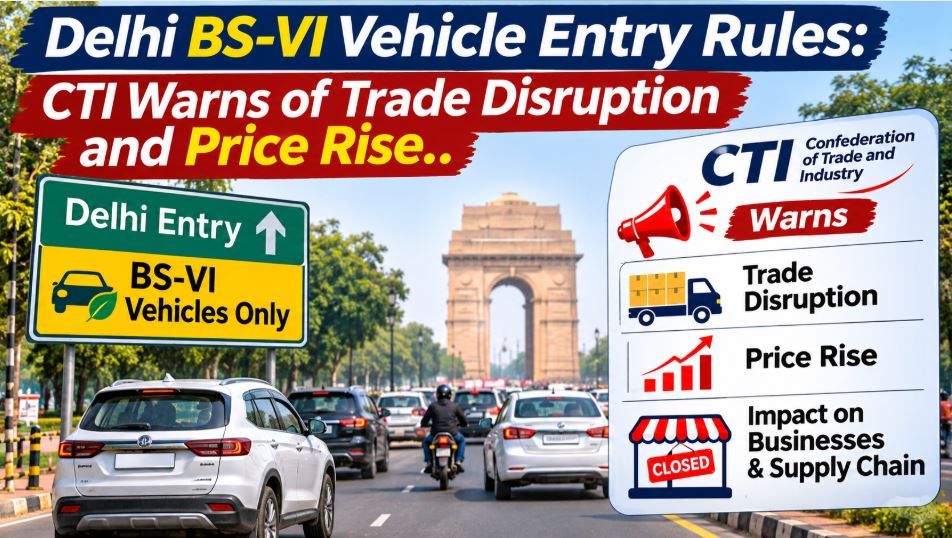
Representational Image
Raising its objections amid the ongoing Supreme Court proceedings on air pollution in Delhi-NCR, CTI said that although reducing vehicular pollution was necessary, restrictions without adequate infrastructure and alternative transport arrangements could create serious economic consequences for the national Capital.
CTI Chairman Brijesh Goyal and General Secretary Ramesh Ahuja said the proposed measures could affect more than 20 lakh traders, entrepreneurs, transporters and consumers. The impact could extend to over 50 lakh people when their family members are included, they said.
Goyal stressed that Delhi was not merely the country's administrative centre but also one of North India's largest commercial and distribution hubs. Any major disruption to the movement of goods, he argued, would have consequences extending beyond businesses to ordinary households.
"Stopping pollution is necessary, but not by killing businesses," Goyal said.
CTI pointed out that Delhi receives large quantities of essential and commercial goods every day, including vegetables, fruits, milk, medicines, groceries, textiles, electronics, automobile components, footwear and construction materials.
According to the trade body, restricting commercial vehicles without establishing an efficient alternative distribution system could interrupt the movement of these commodities and affect both wholesale and retail markets.
The organisation warned that a system requiring goods to be unloaded at warehouses near Delhi's borders and subsequently transported into the city through smaller electric vehicles could significantly increase logistics expenses.
It estimated that transportation costs could rise two to three times due to additional handling, loading and unloading charges, warehouse rentals and last-mile delivery expenses. These increases, CTI cautioned, would ultimately be passed on to consumers through higher prices.
Another major concern relates to the financial condition of small transporters and tempo operators. CTI claimed that more than 80 per cent of goods entering Delhi currently arrive through BS-III and BS-IV vehicles.
The organisation argued that replacing these vehicles with new BS-VI compliant commercial vehicles would impose a substantial financial burden on small operators, many of whom may lack the resources to upgrade their fleets immediately.
It warned that restrictions could threaten the livelihoods of lakhs of transport workers and vehicle owners who depend on daily goods movement for their income.
CTI also expressed concern about the possible impact on Delhi's industrial ecosystem. Manufacturing and trading centres in Bawana, Narela, Okhla, Mayapuri, Jhilmil and Badarpur could face operational difficulties if commercial vehicle movement is restricted.
The trade body cautioned that businesses might consider shifting operations to neighbouring locations such as Ghaziabad, Bahadurgarh, Manesar, Sonipat and Faridabad, potentially affecting employment and economic activity within Delhi.
The city's established wholesale markets, including Sadar Bazaar, Chandni Chowk, Khari Baoli, Bhagirath Palace, Gandhi Nagar and Kashmiri Gate, could also face increased competition from warehouses and distribution centres operating in the wider National Capital Region.
The proposed restrictions could be particularly challenging for businesses dealing in perishable commodities.
CTI warned that additional transshipment procedures could cause delays of four to six hours, potentially affecting the freshness and timely delivery of vegetables, fruits, milk and other sensitive products. Medicines and other essential supplies could also face logistical difficulties.
The organisation further highlighted gaps in Delhi's existing warehousing facilities, cold storage capacity, electric commercial vehicle fleets and charging infrastructure.
Without substantial investment in these facilities, it said, restrictions could affect not only traditional trade but also e-commerce, courier services and construction-related activities.
Calling for a balanced approach to pollution control and economic activity, the trade body placed five demands before the authorities:
Consultative roadmap: Prepare a clear, written implementation plan in consultation with traders, industrial representatives and transporters before introducing restrictions.
Financial assistance: Provide compensation and subsidies to owners of BS-IV commercial vehicles to help them transition to compliant alternatives.
Infrastructure development: Establish adequate warehouses, cold storage facilities and electric vehicle charging stations, with government support.
Regional coordination: Treat Delhi-NCR as a single economic unit while framing transport and commercial vehicle policies.
Essential goods exemptions: Provide separate exemptions for vehicles transporting vegetables, fruits, milk, medicines, groceries and other essential commodities.
Reiterating its position, Goyal said the trading community respected the Supreme Court and recognised the importance of environmental protection. However, he maintained that decisions affecting millions of people should be taken after consulting the stakeholders who would bear their economic consequences.
He urged the authorities to adopt a practical strategy that reduces pollution without undermining Delhi's commercial ecosystem.
The debate highlights the difficult balance facing policymakers as Delhi-NCR continues to grapple with air pollution. While restrictions on polluting vehicles remain part of the wider discussion on improving air quality, the concerns raised by CTI underline the need to consider their implications for transportation, employment, industrial activity and the cost of everyday goods.
For Delhi, the challenge will be to find an approach that protects public health without bringing the city's economic lifeline to a standstill.