BRICS Pushes for Stronger Global Cooperation on Traditional Medicine
BusinessNeel Achary14 Sept 2026
The 18th BRICS Summit has placed traditional, complementary and integrative medicine (TCIM) higher on the international health agenda, with the New Delhi Declaration calling for stronger cooperation, scientific research and evidence-based approaches to traditional healthcare systems.
A major outcome of the declaration is its support for the proposed creation of a BRICS Expert Working Group on Traditional, Complementary and Integrative Medicine under the BRICS Health Track. The proposed mechanism is expected to provide BRICS member countries with a structured platform to exchange knowledge, collaborate on research and develop common approaches to traditional medicine.
Union Minister of State (Independent Charge) for the Ministry of Ayush and Minister of State for Health & Family Welfare, Prataprao Jadhav, said the recognition of TCIM in the declaration represents an important step towards expanding international cooperation in traditional medicine.
He said the proposed expert group could enable member countries to share knowledge, strengthen research and promote evidence-based approaches. India, he added, would continue to advance Ayurveda and other traditional systems through scientific research, quality assurance and international partnerships.
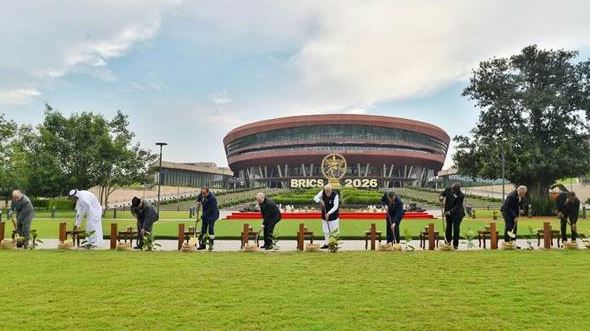
Focus on Research and Medicinal Plants
The New Delhi Declaration places particular emphasis on collaborative research into medicinal plants and herbal preparations used for both preventive and therapeutic purposes.
It notes that the traditional pharmacopoeias of BRICS countries could provide a valuable foundation for developing safe, effective and affordable therapeutic products. Greater collaboration in this area could help countries improve documentation, generate scientific evidence and deepen understanding of medicinal resources.
Secretary of the Ministry of Ayush, Vaidya Rajesh Kotecha, said the declaration provides an opportunity to build more structured cooperation among BRICS nations on TCIM.
According to Kotecha, the proposed Expert Working Group could facilitate collaboration on research, evidence generation, quality standards and regulatory approaches. He said India’s Ayush ecosystem would contribute to the process by promoting rigorous research and evidence-informed practices.
Emphasis on Safety, Quality and Efficacy
The declaration also stresses that TCIM practices and products should meet appropriate standards of quality, safety and efficacy. It encourages evidence-informed approaches and regulatory frameworks that take into account the national circumstances of individual BRICS members.
The emphasis could pave the way for greater exchange of expertise in areas including research methodologies, pharmacopoeial standards, quality control, regulatory systems and scientific validation of traditional medicine.
For traditional medicine systems that have developed over generations, such cooperation could help bridge the gap between traditional knowledge and modern scientific validation while ensuring that new products and practices meet appropriate safety and quality benchmarks.
India’s BRICS Chairship Provides Momentum
The latest development follows the BRICS Meeting on Traditional, Complementary and Integrative Medicine held in Chandigarh on July 21, 2026, during India’s BRICS Chairship.
The meeting brought together government officials, technical specialists and representatives from BRICS member countries to discuss cooperation in areas including research, education, knowledge sharing and regulatory frameworks.
The participating countries also reached consensus on the Terms of Reference for the proposed BRICS Expert Working Group on TCIM, laying the groundwork for more institutionalised cooperation.
The proposed group could subsequently provide a platform connecting policymakers, researchers, academic institutions and technical experts across BRICS countries, potentially allowing cooperation to continue beyond individual meetings and initiatives.
Opportunity for Ayurveda and the Ayush Sector
For India, the declaration is particularly significant because it strengthens the international platform for Ayurveda and other Ayush systems.
India has increasingly focused on scientific research, evidence generation, standardisation, quality assurance and international collaboration as part of its efforts to promote traditional medicine globally. The BRICS framework provides another avenue for India to share its experience while learning from the traditional healthcare systems and research capabilities of other member countries.
The focus on medicinal plants and herbal preparations could also create opportunities for joint research, improved documentation and the development of scientifically validated and quality-assured therapeutic products.
Growing Global Attention to Traditional Medicine
The BRICS initiative comes at a time when traditional medicine is receiving greater attention internationally, particularly in discussions around accessible healthcare, prevention and the strengthening of health systems.
The WHO Global Traditional Medicine Strategy 2025–2034 places emphasis on strengthening the evidence base for traditional medicine, improving safety and quality, and supporting its appropriate integration into health systems.
Against this backdrop, the BRICS focus on TCIM represents more than a formal recognition of traditional healthcare practices. It points towards a model of international cooperation centred on research, scientific evidence, quality, safety and responsible integration.
A More Structured BRICS Health Cooperation Framework
The proposed Expert Working Group could bring together the diverse traditional medicine experience of BRICS countries and encourage collaboration across research, capacity building, knowledge exchange and regulatory practices.
The New Delhi Declaration therefore provides a framework for moving traditional medicine cooperation from dialogue towards more sustained institutional engagement.
For India, it also strengthens the international space for Ayurveda and the broader Ayush ecosystem to participate in global discussions on evidence-based traditional medicine, preventive healthcare and resilient health systems.
By placing TCIM within the BRICS Health Track and connecting it with objectives such as Universal Health Coverage, scientific research, evidence generation, quality, safety and efficacy, the declaration establishes a foundation for deeper cooperation among member countries in developing safe, effective and affordable healthcare solutions.





Business
Aurora Ventures launches to back the boldest female tech founders across emerging markets, including Egypt
Business
Indus Towers and IIT Madras announce partnership to pioneer research in advanced materials for Sustainable GlassFibre Reinforced Polymer Structure
Business
Air India Express Announces Direct Flights Between Bengaluru And Bangkok
Business